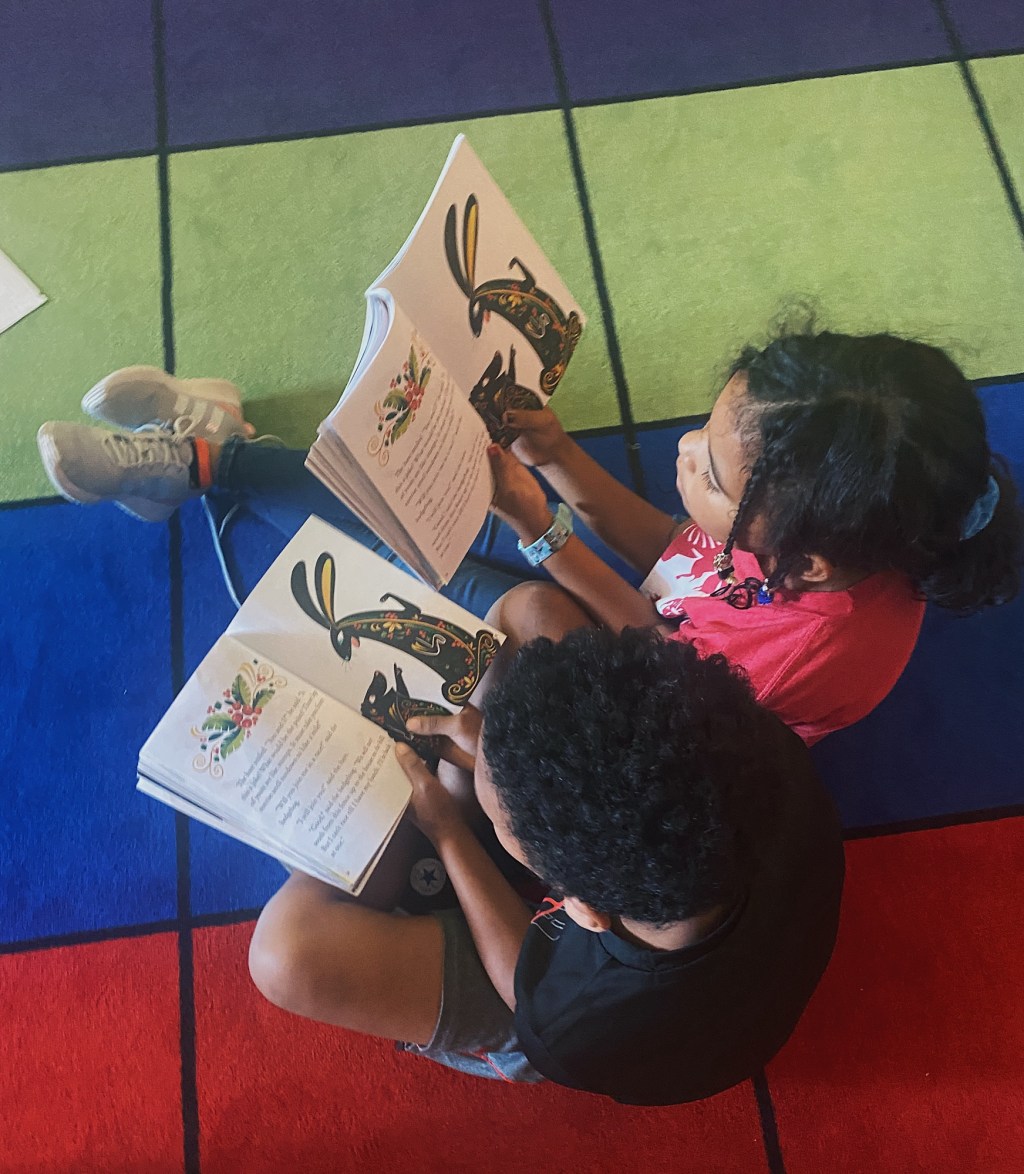
There is a lack of education for public school teachers on how to handle classroom management in a way that is Biblical and honors the Lord. Praise the Lord that we have resources on how to train up a child in the way of the Lord, but they’re geared towards the home. A home that has a husband and wife. A home where you might need child-rearing, but that doesn’t work in the classroom. There are books on classroom management, but is it through the lens of the Gospel? How am I, a single, young, twenty-something-year-old supposed to carry out discipline in the classroom when they are not my own? They are someone else’s children. Do I follow what I learned in college, the latest reel, or YouTube teacher? For now, I have found great wisdom in Tedd Tripp’s book Shepherding a Child’s Heart and watching Paul Tripp go through the heart questions in this video. They both want to get past behavior modification and get to the heart issues and the need for the Gospel in day-to-day life. They want to call sin what it is and to respond in a way that shares the Gospel. I have tried my best to translate these key elements into my classroom. Although still a work in progress, I would love to share how I have taught 2nd graders how to own up to their sin and ask for forgiveness.
In Paul’s video he goes through these questions to get to the heart of the issue. These are the questions that I use as an outline to get the conversation going.
1. What’s going on?
2. What were you thinking and feeling as it was happening?
3. What did you do in response?
4. Why did you do it? What were you seeking to accomplish?
5. What was the result?
Scenario from last Thursday.
I was sitting at my back table listening to another student read a chapter from their book. I noticed out of the corner of my eye a student was waiting patiently to get my attention. I paused what I was doing and asked him if it was an emergency and he said “Yes”. I tell my students the only emergencies are the following four “B’s”, if someone is barfing, being bullied, bleeding, or someone is bringing me coffee (the last ones as a comedic relief). They get the point, so I was confused when I saw this student waiting and nothing seemed wrong. I asked him what was going on. He responded, saying another student called him “An ugly one-eyed minion” as he was sporting a bright yellow hoodie.
In these moments as a teacher, it does not seem like not that big of a deal.This may seem inconsequential. Another student was just poking fun, but one of my class rules is that we respect our classmates in what we say, do, and think.
I could have just shouted across the room and told the other student to stop name-calling and move on, but that would show I didn’t care about this student. It would also show to the other students what can be tolerated in my classroom. However small it may seem, these are powerful moments. Sin is sin. Was this student respecting my student in what he said to him? No. He was disrespecting him by calling him a name and so I was going to deal with it. It does interrupt the flow of the day, but it is worth the time.
Owning Up.
I go ahead and ask the student who is in the wrong.
Hey bud, what’s going on? (pause to give them time to respond)
*after 10-20 seconds he doesn’t respond, his lips are starting to quiver, and he is not wanting to look me in the eyes. Gently, I ask again, “Hey, what was going on over there?” This allows them to share their side of the story, and own up to their mistake instead of attacking them with “Why did you do it?”
We were playing with the blocks and I didn’t say he was an “ugly one-eyed minion”
Well, what were you thinking and feeling as it was happening?
I saw the yellow jacket and we were just having fun.
Ok, so what did you do in response? Did you choose to say something respectful or did you say something disrespectful and not caring?
I did call him a “one-eyed minion”
*He continues to try and hold back his tears.
Why did you do it?
Well, we were just having fun.
In our class we have rules and one of them is to respect your classmates in what you say. Did you choose to obey me and the rules I gave you or yourself and choose what you wanted to do?
I chose to obey myself.
When you chose to obey yourself, what was the result? Did it fix the problem or make a problem?
It made a problem and he’s sad.
*He begins to cry a little.
Did you make a mistake?
Yes.
Forgiveness 101
Ok, even though you made a mistake by saying something disrespectful to your friend, you can ask him to forgive you. I want you to turn and look at your friend in the eyes and say, “I made a mistake by what I said. Will you please forgive me?”
*He turns and faces his friend:
I made a mistake by calling you a name. Will you please forgive me?
The other student: “Yes, it’s okay.”
*If the student says, “It’s okay.” I always stop them and remind them that what happened to them is not okay, but they can choose to accept their apology and say “I forgive you.”
**Now I turn to the student who is about to forgive the other student and teach them that if they choose to forgive and to add “and I will not bring this back up.” I do this because that is what God does with us. He chose to forgive us and when He forgave us He doesn’t bring it back up to smear in front of our face when we mess up.
“As far as the east is from the west, so far does He remove our transgressions from us.” -Psalm 103:12 (ESV)
“For I will be merciful toward their iniquities, and I will remember their sins no more.” – Hebrews 8:12 (ESV)
The other student says: I forgive you and I will not bring it up again.
With this relationship restored, we move on in class. It takes about 3-5 minutes depending on the situation, but it always has been a joy to teach them how to forgive. I have had it from them sinning against me by yelling at me. Other students forgave one another and hugged it out because they said something in a way that was not respectful. To when kids have hit one another. Implementing this in my room has changed the dynamics and has also brought the Gospel to the center of it. When I mess up and have to ask for forgiveness I tell them, “I can forgive you because Jesus has forgiven me.”
Warning, It Backfires
Maybe I am too bold with the word “backfires” but teaching kids how to do this is easy. You can do this. You are the mitigator. You teach and you get to enjoy watching a heart of hurt turn into a heart of repentance and forgiveness. It is possible. It is worth taking the time to do this. You get to do this because Christ has done this for you.
It backfires in the best way possible when a student or friend points out to me that I am in the wrong. That I made a mistake. It is really humbling to ask forgiveness from students and my friends when I have sinned against them. Sin is sin and it needs to be named and needs to be called out because when it does the beauty of the Gospel gets to pierce through and have the final say.
What About You?
These same questions can help you if you have sinned against someone. It maybe helpful to pray and think through them before asking for forgiveness form someone. I know for me they have brought clarity when I was in the wrong. As Dr.Nicolas Ellen says, “You do what you do because you want what you want. You want what you want because you believe what you believe.”
1. What’s going on?
2. What were you thinking and feeling as it was happening?
3. What did you do in response?
4. Why did you do it? What were you seeking to accomplish?
5. What was the result?
“What is causing the quarrels and fights among you? Don’t they come from the evil desires at war within you? You want what you don’t have, so you scheme and kill to get it. You are jealous of what others have, but you can’t get it, so you fight and wage war to take it away from them. Yet you don’t have what you want because you don’t ask God for it. And even when you ask, you don’t get it because your motives are all wrong—you want only wt will give you pleasure.” – James 4:1-3 (NLT)


 Rachel Whisman
Leave a reply to Samantha Rogers Cancel reply